 superfastcarpetcleaning@gmail.com


Office Carpet Cleaning
What Is Office Carpet Steam Cleaning?
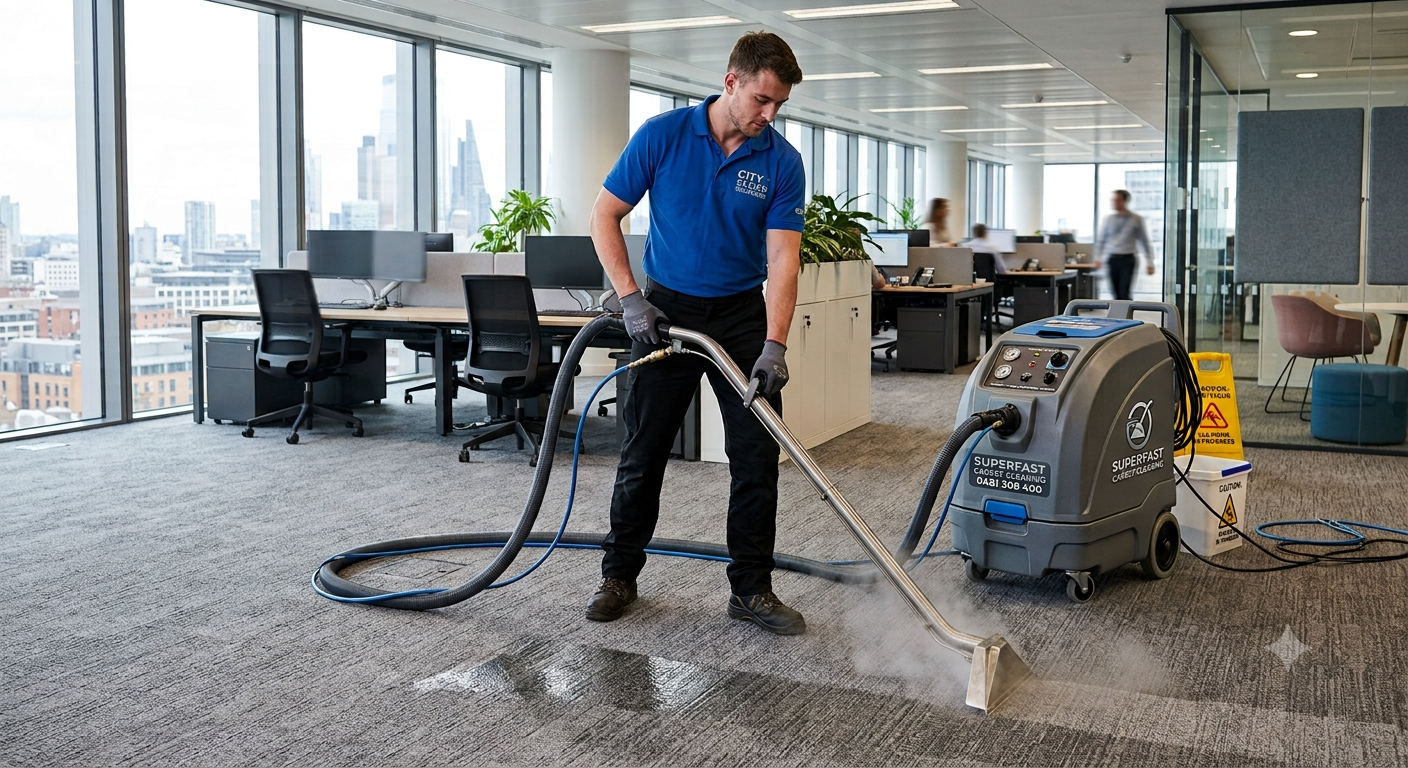
Office carpet steam cleaning is a deep-cleaning process commonly known as hot water extraction.
The term “steam cleaning” is widely used, although the cleaning process mainly relies on heated water, cleaning solution and extraction rather than steam alone.
A cleaning solution is applied to the carpet, helping loosen soil and residue. Professional extraction equipment then removes the used solution, moisture and loosened material from the carpet.
Carpet manufacturer Shaw Floors describes hot water extraction as a process in which a cleaning agent is applied to the carpet pile and water is then used in an extractor to recover the solution and soil. Read Shaw’s carpet-cleaning guidance.
How Hot Water Extraction Cleans Office Carpet
A professional office carpet cleaning job may include:
- Inspecting the carpet and traffic areas
- Vacuuming loose surface soil
- Checking visible stains and spots
- Applying suitable pre-treatment where needed
- Cleaning with hot water extraction equipment
- Treating remaining spots where suitable
- Extracting excess moisture
- Checking the carpet after cleaning
The exact method should depend on the carpet fibre, construction, soil level and condition.
The ANSI/IICRC S100 Standard covers professional carpet maintenance and cleaning, including carpet types, soil management, cleaning systems, inspection, stain removal and related cleaning procedures.
Why Corporate Offices in Perth Need Regular Carpet Cleaning
An office carpet rarely becomes dirty at the same rate across the whole floor.
Some sections may still look clean while entries, corridors and shared areas show clear signs of use.
Facility managers can get better results by looking at how each area is used instead of treating the entire office as one cleaning zone.
Heavy Foot Traffic Carries Soil Through the Office
Every person entering an office can bring in small amounts of dirt and grit on their footwear.
Over time, repeated traffic can work that material further into the carpet.
Areas that usually need extra attention include:
- Main entrances
- Reception areas
- Corridors
- Routes between desks and meeting rooms
- Lift and stair access points
- Kitchen entrances
- Printer and shared equipment areas
The Carpet and Rug Institute recommends giving high-traffic carpet more frequent attention because repeated foot traffic can work dirt into the carpet.
Coffee, Food and Everyday Office Stains
Coffee and food spills are common problems in corporate offices.
The sooner a spill is dealt with, the better the chance of removing it before it becomes harder to treat.
The CRI 204 Commercial Carpet Standard says delays can increase the chance of a spill becoming a permanent stain. It also explains that carpet may be stain resistant without being completely stain proof. View CRI’s commercial carpet cleaning standards.
Staff should avoid aggressive rubbing or scrubbing. Blotting and using a suitable carpet-care method is generally a better first response.
Carpet Odours in Busy Shared Workspaces
Office carpet odours can have several causes.
They may come from:
- Old drink or food spills
- Moisture
- Residue left after previous cleaning
- Soil carried indoors
- Waste or food stored close to carpeted areas
- A stain that has moved below the visible carpet surface
Simply adding fragrance does not remove the cause of an odour.
A better approach is to find the source first. The carpet can then be assessed to decide whether extraction cleaning, stain treatment or another cleaning method is suitable.
Carpet Cleaning as Part of Workplace Hygiene
Carpet care should sit within a wider office cleaning plan.
Safe Work Australia says workplaces and facilities should be cleaned regularly, taking into account matters such as the type of work, possible contamination and the number of people using the space. Read the Safe Work Australia workplace facilities guidance.
WorkSafe WA also includes a carpet-cleaning regime among measures that may be used when managing some indoor air contaminants. Read WorkSafe WA’s indoor air quality guidance.
Carpet cleaning should not be treated as a replacement for ventilation, general cleaning or other workplace maintenance. It is one part of keeping the office clean and well maintained.
Which Office Carpet Areas Need the Most Attention?
The best commercial carpet cleaning plan is based on traffic.
Here are some areas facility managers should check regularly.
Reception and Main Entrances
Entrances often receive the highest level of foot traffic.
They also collect dirt carried in from car parks, footpaths and outdoor areas.
Good entrance matting and frequent vacuuming can reduce the amount of soil that travels further into the office.
Corridors and Walkways
Office corridors often develop visible traffic lanes because employees follow the same routes each day.
These areas may need more frequent vacuuming and inspection than carpet under desks or around the edges of rooms.
Meeting Rooms and Boardrooms
Meeting rooms can experience short periods of heavy use.
Look for:
- Coffee marks
- Food spills
- Soil near doorways
- Marks around chairs
- Traffic around presentation areas
Kitchen and Breakout Areas
Carpet close to office kitchens and breakout spaces is more likely to be exposed to food and drink.
Fast spill response is useful in these areas.
Facility teams should also investigate repeat odours rather than covering them with air freshener.
Open-Plan Work Areas
Open offices often have a mix of traffic levels.
Carpet underneath desks may receive little foot traffic, while the paths between desks, meeting rooms, kitchens and exits can receive constant use.
Dividing the floor into traffic zones can make carpet maintenance easier to plan.
Office Carpet Care at a Glance
| Office area | Typical use | Routine carpet care | Signs deeper cleaning may be needed |
|---|---|---|---|
| Main entrance | Very high | Frequent vacuuming and mat care | Dark traffic lanes, soil build-up |
| Reception | High | Frequent vacuuming and spot checks | Visible marks or dull carpet |
| Corridors | High | Frequent vacuuming | Traffic patterns or embedded soil |
| Meeting rooms | Medium to high | Vacuuming and spill response | Drink stains or heavy use |
| Open work areas | Mixed | Scheduled vacuuming | Dull or uneven-looking carpet |
| Boardrooms | Low to medium | Regular inspection and vacuuming | Stains or marks after events |
Can Office Carpet Steam Cleaning Remove Stains?
Professional steam cleaning can remove many office carpet stains, but no cleaner should promise that every stain will come out.
The result can depend on:
- What caused the stain
- How long it has been there
- The carpet fibre
- Whether somebody has already used another chemical on it
- Whether the spill has reached the carpet backing
- Whether the material has permanently changed the carpet colour
A site inspection can help determine the best treatment before cleaning begins.
Common Office Carpet Stains
Corporate offices commonly deal with marks from:
- Coffee
- Tea
- Soft drinks
- Food
- Mud
- Dirt from footwear
- Printer or office materials
- General spills around shared spaces
Different stains may require different treatments.
Using one strong cleaning product on every mark can damage carpet or leave residue behind.
Why Early Stain Treatment Matters
Fast action gives a spill less time to settle into carpet fibres.
The CRI commercial standard recommends removing excess material, blotting or absorbing liquid and checking cleaning products before use. It also warns that waiting longer can increase the chance of permanent staining.
For staff, a simple first-response process can help:
- Remove excess material without spreading it.
- Blot liquid with a clean white absorbent cloth.
- Do not aggressively scrub the carpet.
- Record the location if the stain needs professional treatment.
- Arrange cleaning before the spot receives heavy foot traffic.
Can Steam Cleaning Remove Odours From Office Carpet?
Steam cleaning can help with carpet odours when the smell is connected to material that can be removed from the carpet. The cause of the smell should be checked first.
For example, extraction cleaning may help when an odour comes from an old spill or residue held in the carpet.
However, carpet cleaning alone may not solve an odour caused by a water leak, mould, waste, damaged underlay or another source outside the carpet pile.
Where Office Carpet Odours Come From
Common sources may include:
- Food and beverage spills
- Moisture
- Old stains
- Dirty entrance areas
- Residue
- Waste near carpeted areas
Finding the source helps prevent the same smell from returning.
Clean the Source Rather Than Masking the Smell
Fragrance may temporarily cover an odour, but it does not tell you why the smell is there.
A cleaner should first inspect the affected area and identify likely causes.
Superfast Carpet Cleaning lists carpet deodorising, odour treatment, stain removal and deep extraction among its Perth office carpet cleaning services. View Superfast Carpet Cleaning’s office services.
How Often Should Office Carpets Be Cleaned?
There is no single cleaning interval that suits every Perth office.
Cleaning frequency should reflect how the carpet is used.
The Carpet and Rug Institute recommends more frequent vacuuming in high-traffic areas and professional deep cleaning as part of ongoing carpet care. Its general guidance refers to professional deep cleaning around every 12 to 18 months, while high-use commercial areas can require more attention.
A facility manager should also check the carpet manufacturer’s maintenance requirements.
High-Traffic Office Carpet
Examples include:
- Entrances
- Reception
- Main corridors
- Shared walkways
- Busy meeting areas
These sections should be checked often.
Waiting until a traffic lane becomes very dark can make maintenance harder.
Medium-Traffic Carpet
Medium-use spaces may include:
- Smaller meeting rooms
- Some workstation areas
- Training rooms
- Secondary walkways
Cleaning can be based on inspection, use and the amount of visible soil.
Low-Traffic Rooms
A boardroom used only a few times each month may not need the same cleaning cycle as a busy reception.
Still, low-use rooms can develop isolated drink stains or marks after meetings and events.
A traffic-based plan avoids unnecessary cleaning while giving busy sections more attention.
What Happens During Professional Office Carpet Steam Cleaning?
A planned office carpet cleaning service should start before the extraction machine is switched on.
1. Office and Carpet Inspection
The cleaner checks:
- Carpet condition
- Traffic patterns
- Stains
- Fibre or construction where known
- Areas requiring special attention
- Access to the work area
This is also the right time for the facility manager to point out repeat problem areas.
2. Pre-Vacuuming and Spot Assessment
Loose dry soil should be removed before wet cleaning where the selected cleaning process calls for it.
Visible stains can also be checked so suitable treatment can be chosen.
3. Carpet Treatment
Heavily used or soiled areas may receive pre-treatment before extraction.
The product and process should suit the carpet.
4. Hot Water Extraction
The carpet is cleaned using hot water extraction equipment.
Used cleaning solution, moisture and loosened soil are extracted from the carpet.
5. Spot Treatment
Marks that remain after the main clean can be checked again.
Some may respond to further treatment, while others may be permanent or may require another method.
6. Final Inspection and Drying
Excess moisture is extracted and the cleaned area is checked.
Air movement, ventilation, carpet construction, weather and the amount of moisture left after extraction can all affect drying.
The IICRC S100 standard includes both pre-cleaning and post-cleaning inspections as part of professional textile floor-covering cleaning practice.
How Can Carpet Cleaning Be Scheduled Around Office Hours?
Facility managers often need carpet cleaning completed without causing unnecessary disruption to staff.
The cleaning plan can be built around the workplace.
Clean the Office in Sections
A large corporate floor does not always need to be cleaned as one area.
The work may be divided into sections such as:
- Reception
- Meeting rooms
- One office wing
- Corridors
- Open-plan sections
This can help keep other parts of the office available.
Plan Around Busy Office Areas
Before the service, identify rooms or walkways that cannot be closed during normal operations.
Cleaning can then be planned around those areas where scheduling allows.
Superfast Carpet Cleaning states that office appointments can be arranged during business hours or after hours where possible.
Allow for Drying Before Normal Use
There is no single drying time that applies to every carpet.
Drying can change based on:
- Carpet fibre and construction
- Indoor temperature
- Ventilation
- Air movement
- Humidity
- Cleaning equipment
- Amount of moisture extracted
A site visit allows these practical points to be discussed before the cleaning date.
Record Repeat Stain and Traffic Problems
Facility managers can keep a short record of:
- Repeat spill areas
- Stains
- Odours
- Heavy traffic lanes
- Recent cleaning dates
This makes it easier to see which sections need more attention.
Review Carpet Condition on a Set Schedule
Do not rely only on a calendar date.
Walk through the office and inspect the carpet.
Look for:
- Traffic lanes
- Spots
- Stains
- Odours
- Dull sections
- Soiling near entrances
A visual check can help you plan cleaning before the carpet becomes heavily soiled.
Office Carpet Steam Cleaning Across the Perth Region
Corporate office space in Perth continues to see active leasing and tenant movement.
CBRE reported about 85,000 square metres of Perth CBD office enquiries in Q2 2026, which was 17% higher than the same period a year earlier. It also reported 25 leasing transactions of at least 500 square metres during the quarter, compared with 13 a year earlier. See CBRE’s Perth CBD Q2 2026 figures.
For facility teams managing occupied offices, fit-outs, tenant changes or shared corporate spaces, planned carpet care can help keep high-use areas ready for staff and visitors.
Superfast Carpet Cleaning provides office carpet cleaning services for businesses across Perth and surrounding suburbs.
Why Choose Superfast Carpet Cleaning for Your Perth Office?
Office carpet cleaning should fit the workplace rather than forcing the workplace to fit the cleaning job.
Superfast Carpet Cleaning provides commercial carpet services for Perth offices, including:
- Office carpet steam cleaning
- High-traffic area cleaning
- Spot and stain treatment
- Carpet deodorising
- Odour treatment
- Deep extraction cleaning
- Scheduled carpet maintenance
- End-of-lease office carpet cleaning
The company’s office cleaning service also offers flexible scheduling options where available. Learn more about Superfast Carpet Cleaning’s commercial services.
Start With a Site Visit
Every corporate office is different.
A site visit allows the carpet, floor area, stains, access points and high-traffic zones to be checked before the job is planned.
It also gives facility managers a chance to discuss timing and problem areas before receiving a quote.
Ready to plan your office carpet cleaning in Perth?
Book A Free Site Visit and Get Quote
Contact Superfast Carpet Cleaning to arrange a free site visit for your Perth office and receive a quote based on your workplace and carpet-cleaning needs.
Book your free site visit with Superfast Carpet Cleaning
Frequently Asked Questions About Office Carpet Steam Cleaning
1. How often should office carpets be steam cleaned?
There is no fixed schedule for every office. High-traffic carpet may need professional cleaning more often than low-use rooms. Traffic, spills, soil level, carpet type and manufacturer guidance should all be used when setting the schedule.
The Carpet and Rug Institute recommends regular vacuuming, extra attention for high-traffic areas and periodic professional deep cleaning. See the CRI carpet maintenance guidance.
2. Does office carpet steam cleaning remove stains?
Steam cleaning and professional stain treatment can remove many common office marks, including some drink, food and soil stains. Results depend on the material, carpet fibre, age of the stain and previous treatments.
CRI guidance says fast treatment gives a better chance of dealing with spills before they become permanent stains. Read CRI’s commercial carpet standards.
3. Can carpet cleaning help with office carpet odours?
Yes, when the smell comes from removable residue or material within the carpet, professional cleaning may help. The source should be identified first because smells caused by water leaks, mould, damaged underlay or another building problem may require separate work.
WorkSafe WA recommends investigating sources of indoor air quality problems rather than relying on a single cleaning measure. Read WorkSafe WA’s indoor air quality information.
4. Which office carpet areas need cleaning most often?
Entrances, reception areas, corridors and busy shared walkways normally receive more foot traffic and should be checked more often than low-use carpet.
The Carpet and Rug Institute recommends more frequent carpet care where traffic is heavier.
5. How should a facility manager prepare an office for carpet cleaning?
Start by identifying stains, odours, high-traffic sections and rooms that need to remain available. Discuss access, furniture, timing and expected drying conditions with the cleaner before the service.
Professional carpet-cleaning guidance from IICRC includes pre-cleaning inspection as part of the cleaning process. Read about the ANSI/IICRC S100 Standard.
Need office carpet steam cleaning in Perth? Book A Free Site Visit and Get Quote.

